Thursday, November 02, 2006

Samsung Develops First 16GB Multi-Chip Package

Samsung Electronics announced Wednesday that it had developed the world’s first 16-chip MCP (multi-chip package) technology by stacking 16 memory chips in one package. The new 16-chip MCP is created by staking 16 8Gb (gigabit) NAND flash chips, which has the highest density among products currently being produced, and allows up to a 16 gigabyte (GB) MCP solution, said the company. And the firm added that 16 stack is 30 percent smaller than a 10-chip MCP developed last year. Since the first development of technology with 6-chip MCP in 2003, the company has followed up with 8-chip MCPs in 2004, 10 in 2005, and this year 16-chip varieties, leading the MCP industry four straight years.

As mobile digital devices centered on cell phones are getting smaller and smaller while at the same time being equipped with an increasing array of features, the demand for MCP, which enables stacking several kinds of memory chips in a package, is growing. As the sole firm to possess the memory total solution technology that composes the MCP, Samsung Electronics topped the world MCP market for the first time in 2004, and is expected to maintain the top spot this year for the third straight year with market share of 35 percent. “With Samsung holding technology that is around two years ahead of the competition, who are mired in staking 8 chips, we anticipate the company’s leadership in the next generation package technology field will become even more pronounced,” the company said.

(englishnews@chosun.com )

Friday, October 20, 2006

Samsung Develops 1Gb 50-Nanometer DRAM

Samsung Electronics on Thursday said it has developed the world's first 1 GB 50-nanometer dynamic random access memory (DRAM) chip. The world's largest memory chipmaker said the 50-nanometer process technology will see twice the productivity of the 80 nanometer process now used to produce DRAM chips. Samsung will start mass producing the minuscule memory chips commonly used in laptops from 2008. The company says it expects this year's sales of DRAM products to reach US$ 10 billion.

Arirang News

Thursday, August 24, 2006

This lineup shows the 12 planets that were proposed last week, with a wedge of the sun at far left. Ceres, Pluto, Charon and 2003 UB313 are barely visible. Now Charon will continue to be considered Pluto's satellite, and the three other worlds will be dubbed "dwarf planets" rather than full-fledged planets. The planets are drawn to scale, but without correct relative distances.
View related photos

By Robert Roy Britt

Capping years of intense debate, astronomers resolved Thursday to demote Pluto in a wholesale redefinition of planethood that is being billed as a victory of scientific reasoning over historic and cultural influences. But the decision is already being hotly debated.

Officially, Pluto is no longer a planet.

"Pluto is dead," said Mike Brown, a planetary scientist at the California Institute of Technology who spoke with reporters via a teleconference while monitoring the vote. The decision also means a Pluto-sized object that Brown discovered will not be called a planet.

"Pluto is not a planet," Brown said. "There are finally, officially, eight planets in the solar system."

The vote involved just 424 astronomers who remained for the last day of a meeting of the International Astronomical Union in Prague.

"I'm embarrassed for astronomy. Less than 5 percent of the world's astronomers voted," said Alan Stern, leader of NASA's New Horizons mission to Pluto and a scientist at the Southwest Research Institute.

"This definition stinks, for technical reasons," Stern told Space.com. He expects the astronomy community to overturn the decision. Other astronomers criticized the definition as ambiguous.

The resolution
The decision establishes three main categories of objects in our solar system.

Planets: The eight worlds starting with Mercury and moving out to Venus, Earth, Mars, Jupiter, Saturn, Uranus and Neptune.
Dwarf planets: Pluto and any other round object that "has not cleared the neighborhood around its orbit, and is not a satellite."
Small solar system bodies: All other objects orbiting the sun.
Pluto and its moon Charon, which would both have been planets under the initial definition proposed Aug. 16, now get demoted because they are part of a sea of other objects that occupy the same region of space. Earth and the other eight large planets have, on the other hand, cleared broad swaths of space of any other large objects.

"Pluto is a dwarf planet by the ... definition and is recognized as the prototype of a new category of trans-Neptunian objects," states the approved resolution.

Dwarf planets are not planets under the definition, however.

"There will be hundreds of dwarf planets," Brown predicted. He has already found dozens that fit the category.

Contentious logic
The vote came after eight days of contentious debate that involved four separate proposals at the group's meeting in Prague.

The initial proposal, hammered out by a group of seven astronomers, historians and authors, attempted to preserve Pluto as a planet but was widely criticized for diluting the meaning of the word. It would also have made planets out of the asteroid Ceres and Pluto's moon Charon. But not now.

"Ceres is a dwarf planet. it's the only dwarf planet in the asteroid belt," Brown said. "Charon is a satellite."

The category of "dwarf planet" is expected to include dozens of round objects already discovered beyond Neptune. Ultimately, hundreds will probably be found, astronomers say.

The word "planet" originally described wanderers of the sky that moved against the relatively fixed background of star. Pluto, discovered in 1930, was at first thought to be larger than it is. It has an eccentric orbit that crosses the path of Neptune and also takes it well above and below the main plane of the solar system.

Recent discoveries of other round, icy object in Pluto's realm have led most astronomers to agree that the diminutive world should never have been termed a planet.

'A farce'
Stern, in charge of the robotic probe on its way to Pluto, said the language of the resolution is flawed. It requires that a planet "has cleared the neighborhood around its orbit." But Earth, Mars, Jupiter and Neptune all have asteroids as neighbors.

"It's patently clear that Earth's zone is not cleared," Stern told Space.com. "Jupiter has 50,000 Trojan asteroids," which orbit in lockstep with the planet.

Stern called it "absurd" that only 424 astronomers were allowed to vote, out of about 10,000 professional astronomers around the globe.

"It won't stand," he said. "It's a farce."

Stern said astronomers are already circulating a petition that would try to overturn the IAU decision.

Thursday, July 20, 2006

Samsung Starts Making 8 GB Flash Memory Chips

Samsung Electronics has started mass producing 60 nanometer 8 GB NAND Flash memory chips, the company said Wednesday.
The 60 nanometer processing technology uses circuits the size of a hair sliced into 2,000 strands, the smallest circuits of any such product on the market. "The 60-nano technology is up to 25 percent more productive than the existing 70-nano, so we’ll be able to maintain our competitive price advantage,” a staffer with the world's no. 1 semiconductor maker said.
(englishnews@chosun.com )

Tuesday, July 11, 2006

Boeing Poised to Win Spy Plane Bid After All


The U.S. aerospace giant Boeing looks likely to win a W1.58 trillion contract to supply the nation's air force with four airborne warning and control systems (AWACS) planes by 2009. The bid in the epically delayed E-X project earlier looked set to make Korean defense procurement history when a non-U.S. bidder, IAI Elta of Israel, seemed likely to get the nod.

"After both the aircraft by Boeing and IAI Elta were found to meet the combat use requirements, four conditions had to be met,” a Defense Ministry official said. "IAI Elta was unable to meet some of them, so realistically it is likely to be excluded." If Elta, the sole other bidder, has been knocked out, the Defense Acquisition Program Administration (DAPA) will sit down for more price negotiations with Boeing before making the final decision.

DAPA will convene a meeting on Thursday to select the equipment “that best meets the conditions of the military.”
(englishnews@chosun.com )

Sunday, June 25, 2006

'Bloodless' Surgery Offers Hope for Cancer Patients

“Bloodless” operations, which remove affected tissue without invasive incisions, are making progress as hospitals compete with each other to introduce as it were cutting-edge surgical tools. From Gamma Knife to Haifu Knife, bloodless operations start with setting the three-dimensional coordinates of a lesion to be removed using advanced imaging equipment such as CT or MRI and are completed by concentrating thousands of beams of radiation from outside the body. Bloodless surgery is fast substituting traditional surgery with the scalpel as it is performed with negligible loss of blood and leaves barely a scar.

It started in the 1960s, when Gamma Knife radiosurgery was developed. The tool is considered the most accurate and safest among neurosurgical tools using radiation. “The Gamma Knife is far safer and more effective than operations that require incisions into the skull,” says Kim Dong-gyu, a professor of neurosurgery with Seoul National University Hospital. “What’s more, it’s more reliable than other recently introduced bloodless surgery tools because it’s been tried and tested for the past 40 years without problems.” But it has its drawbacks: it can be used only on the brain, and setting coordinates requires attaching a stereotactic frame to the patient’s head by drilling four holes into the skull.

The Cyber Knife, a successor to the Gamma Knife, is an advanced radiosurgical treatment, combining the latest robotic technologies with navigation technologies from NASA. As the focus of radiation beams moves along with patient’s movement, it works without the need for additional equipment to fix the patient’s body or anesthesia, unlike the Gamma Knife. The Cyber Knife can be used not only on the brain but also the pancreas, lung and other organs throughout the body and particularly on constantly moving organs such as stomach and colon. “Cyber Knife treatment is available for tumors as large as 5-6 cm and highly accurate as radiation beams are projected on the lesion from 1,248 different directions,” says Kim Moon-chan, the director of Gangnam St. Mary's Hospital’s Cyber Knife Center at Catholic University of Korea.

Tomotherapy is the latest radiation treatment equipment. It consists of a CT scanner that locates the targeted organs and a Linac or linear accelerator where radiation beams are projected. While the Gamma Knife and the Cyber Knife work on relatively small tumors, Tomotherapy can be used for any cancerous cells no matter how large they are. It has highly accurate by precisely controlling the intensity of radiation entering the patient’s body and is therefore very effective in treating multiple cancers, cancer of the esophagus, and lung cancer. The caveat is that it is not covered by insurance and patients pay more than W20 million (US $20,000) for the treatment.

The High Intensity Focused Ultrasound Therapeutic System or Haifu Knife projects ultrasound waves onto a lesion for 2-3 seconds so that the 65-90 degrees Celsius generated can burn out tumors. It is useful for breast cancer, osteosarcoma or bone cancer, pancreatic cancer and liver cancer. The pulsed Haifu, however, cannot penetrate air or solid tissue such as bones and cannot be used to treat colon or lung cancer. “The Haifu works on tumors regardless of their size as it doesn’t destroy healthy tissue, unlike other radiation treatment,” .(englishnews@chosun.com )

Thursday, June 01, 2006

Engine Run By Water

The HHOS car he has invented is a hybrid that can also run separately on gasoline. Just flip a switch and the Aquygen kicks in. The result is up to a 50 percent jump in gas mileage. Klein's Ford Escort gets 344 on a tank of gas, and 576 miles with a little Aquygen mixed in. Klein sees a future totally Aquygen powered car you could drive 100 miles on 4 ounces of water. "You just drive it like a regular car, the infrastructure is already in place to get it serviced, so we don't have to reinvent the wheel."


Characteristics of Aquygen™ Gas (HHO)

* Aquygen™ Gas flame temperature itself is only between 259° F to 279° F when produced in ambient open air.

* Aquygen™ Gas produces NO toxic fumes when burned because it is pure water.

* Aquygen™ Gas develops a temperature differential ranging from 259° F to well over 10000° F depending on the material substrate being worked. This allows each material to be worked, using dissimilar materials together or separately, without changing the fuel or its setting.

* Aquygen™ Gas, when combusted, produces no ultra-violet radiation and does not require special protective eyewear or clothing when used.

* Aquygen™ Gas is generated on location, thus eliminating the need for gas tanks, bottles and large storage facilities that are inherently hazardous.

Tuesday, May 30, 2006

Sony Challenges Samsung in Mini PC Market


Leading PC manufacturers Samsung Electronics and Sony are bracing themselves for battle in the market for small portable computers. After Samsung Electronics introduced an “ultra-mobile” PC early this month, Sony has now unveiled an even more portable hand-sized PC.

Sony released the VAIO UX, a pocket PC with a 4.5 inch screen, in Korea on Monday. Equipped with Intel’s mobile CPU, it comes with a small keyboard and has two built-in cameras to allow users to make video phone calls online or record high-quality video clips.

The new VAIO is targeted at the same market as Samsung Electronics’ UMPC, experts say. Both of them offer improved portability to a niche market of mobile users. The Samsung UMPC garnered much attention as the product of cooperation between three giants in the field: Samsung, Intel and Microsoft.

The UMPC is sized halfway between a PDA and a laptop. Its screen measures 7 inches, and the whole device weighs around 700 g as against the VAIO UX’s 500 g. Samsung claims the device is “soaring” in popularity, with some 3,000 sold so far.

The two firms are also set to compete head-on in a putative market for mini laptops. Mini laptops will weigh around 1 kg, which makes them also easy to carry around, and they have found some favorable advance notice with news that they are almost the equal of their larger predecessors in terms of performance.

(englishnews@chosun.com )

Wave Energy Parks Could be Coming To Oregon

Columbia, Oregon State University are in the thick of it again. Previously we noted they had help develop a soy based timber adhesive that was free of formaldehyde and were working with farmers to bring microtechnology to the production of biodiesel. Now they are dreaming up farms of a different sort. Wave farms. The idea is to plant direct drive, wave energy buoys off the coast of Oregon.

Unlike many of the other wave energy sources we’ve covered before, these work on a very different principle. In very basic terms a permanent neodymium-iron-born magnet is forced back and through an electric coil by the modulation of waves. The researchers suggest such buoys could power about 20% of Oregon’s electricity needs. This is US’s only university research program into ocean wave energy extraction funded from federal resources. Now that the prototypes buoys have demonstrated their potential, study is underway to consider impacts on sea birds and marine life from electromagnetic fields, construction, deployment, and servicing of undersea cable, etc.

Wednesday, May 10, 2006

Handheld Devices Progress by Leaps and Bounds

Black Label II

Handheld devices continue to develop at a rapid pace. Samsung Electronics, LG Electronics and other companies are introducing ever slimmer devices with multimedia functions that allow users to watch shows aired by terrestrial networks and listen to MP3 music files. This moth alone, they will showcase them at expos in Seoul, Russia and China. Small and medium-sized companies, meanwhile, are entering new markets with a state-of-the-art display device users can wear like a pair of glasses to watch digital broadcasts.
Korean mobile phone makers are betting on making them slimmer. Samsung Electronics has just released its “ultra slim” phone, which is just 6.9 mm thick, at the Sviaz ExpoComm 2006, an information and communication technology show that started on Wednesday in Moscow. “The trickiest part of the technology is to make mobile phones as slim as possible and feature a camera function at the same time,” a Samsung executive says.

LG Electronics unveiled a new mobile phone to be released at the Expo Comm Wireless Korea 2006 this week. The new model, named “Black Label II”, is designed for simplicity with red keys on a black surface. It is only 16.5 mm thick and weighs 88 grams. Pantech is to introduce 32 cutting-edge mobile devices including a slim phone targeted at young office workers and a phone equipped with a touch wheel sensor at the Sviaz ExpoComm.

Phones are also getting smarter. Newly released handsets have multimedia functions enabling users to watch TV shows broadcast by terrestrial networks and play online games while listening to MP3 music files or download video clips.

Two women wear so-called ‘video glasses’ that enable users to enjoy high-definition video stored in their handheld devices during the Expo Comm Korea 2006 at COEX in Samseong-dong, Seoul on Wednesday.

That means small and medium-sized firms have to develop original devices to compete with their bigger rivals. Kowon Technology, which produces microdisplay devices, has unveiled a pair of “video glasses.” With a built-in micro LCD panel measuring 4.8 mm by 4.2 mm, the device enables users to watch digital broadcasts when connected to digital multimedia broadcasting handsets. “The device gives users the same feeling as watching a 32-inch TV from a 2 m distance”, the company claims. The glasses bring the virtual reality of sci-fi movies a step closer to reality.

(englishnews@chosun.com )

Monday, May 08, 2006

Korea has developed its own android capable of facial expressions on its humanoid face, the second such machine to be developed after one from Japan. The Ministry of Commerce, Industry and Energy invited some 60 children to the Kyoyuk Munhwa Hoekwan in Seoul to introduce Ever-1 to the public. The name combines the first human name found in the Bible, Eve, with the "r" in robot.
The Korean Institute for Industrial Technology (KITECH) said the android, which has the face and body of a woman in her 20s, is 160 cm tall and weighs 50 kg. Ever-1 can move its upper body and “express” happiness, anger, sadness and pleasure. But the robot is still incapable of moving its lower half. Ever-1's skin is made from a silicon jelly that feels similar to human skin. The face is a composite of two stars, and its torso on a singer.
The 15 monitors in the robotic face allow it to interpret the face of an interlocutor and look back at whoever stands near it. Ever-1 also recognizes 400 words and can hold a basic verbal exchange.
"The robot can serve to provide information in department stores and museums or read stories to children; it’s capable of both education and entertainment functions," said KITECH scientist Baeg Moon-hong, part of the team that created the robot. "The Ever-2, which will have improved vision and ability to express emotions and can sit or stand, will be debuted towards the end of the year."

(englishnews@chosun.com )

Tuesday, May 02, 2006

SKT Becomes First Korean Mobile Carrier in U.S.

Korea’s largest cell phone service provider SK Telecom has entered mobile telecom powerhouse the U.S.

SK Telecom on Tuesday said its U.S.-based joint venture Helio started offering mobile services throughout the U.S., the first time for Korean mobile service provider to foray into the world’s biggest market.

Helio was set up by SKT and Earthlink, the American Internet service provider, in January 2005 with each side owning 50 percent.

SKT expects Helio to sign up some 3.3 million subscribers there by 2009 and generate annual revenues of US$2.4 billion.


SKT’s entry into the U.S. market is also the first full-fledged commercial advance into an overseas market by a Korean carrier. SKT has made continuous attempts to go overseas since early 2000 but was only able to make limited advances into markets like Vietnam and Mongolia. Most nations consider fixed-line and wireless telecom services a key industry and a national asset they are loath to hand over to foreigners. SKT’s move thus represents an important milestone in its efforts to go global. If it is successful, it could help the company advance into emerging markets in Asia, where China and India are the biggest prize.

SKT plans to target Korean-Americans. Helio is headquartered in Los Angeles, where Koreans are concentrated, and will launch two bilingual Korean- English mobile phones. It initially charges only 10 cents per minute for calls from the U.S. to Korea. “We expect the 2 million Koreans living in the U.S. to play an important role in allowing Helio to spread throughout the country,” the company said.

SKT is pinning its hopes on its cutting-edge wireless Internet service, too. It plans to target young people by offering weather forecasts, traffic information, and sports and entertainment information to their phone and allowing them to search information on Yahoo and use its messenger service to send both video clips and text messages. It will also offer cell phone blog services free of charge no matter how much subscribers use them. That service too will be available in two languages.

But obstacles loom. The U.S. telecom market is saturated just like Korea’s and Americans are not nearly as enthusiastic about wireless Internet services on their phones as Koreans and Japanese. That explains why cheap, simple cell phones introduced by Nokia and Motorola, the world’s no 1 and no 2 makers, are hugely popular there.

“SKT’s strategy has been to minimize its investment risk by leasing telecom networks owned by existing providers in the U.S.,” says Kim Kyung-mo, an analyst at Mirae Asset Securities. “The company’s ultimate goal will be to enter emerging markets in Asia such as India.”

(englishnews@chosun.com )

Friday, April 14, 2006

Korean Firm Develops Smaller Projector Module


Korean manufacturer Iljin Display says it has developed technology that can be used to reduce a projector to the size of a cigarette packet, raising hopes that they can become part of mobile phones and other portable devices much like digital cameras.

Iljin Display said Thursday it developed the world’s first single LCD projector panels. The module, which enables projectors or projection TVs to produce images, is a core component in such appliances, which are becoming increasingly popular not only in the office but also for home theaters.

Existing modules use three LCD panels, one each for the red, green and blue components of the video signal, but Iljin’s new single panel can produce a full natural-color image, the firm says. It says the development reduces size as well as cost.

With a tiny single panel, mobile gadgets like handsets, MP3 players and game consoles can project images larger than 10 inches on walls or screen with a click of a button if they are equipped with it, said Iljin president Park Seung-gwon.

The company is working with a Taiwanese manufacturer to develop projectors using the module with the goal of releasing them at a price of around W500,000 (US$500), half of what they cost now, by September.

Iljin aims to achieve annual revenues of W530 billion in the projector LCD module business by 2010. Its revenues last year stood at W8.6 billion.
(englishnews@chosun.com )

Saturday, April 08, 2006

‘Gospel of Judas’ offers contrarian view of Jesus

‘Gospel of Judas’ offers contrarian view of Jesus
Controversial manuscript authenticated as early Christian writing
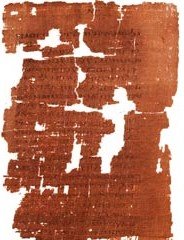
WASHINGTON - An ancient manuscript rediscovered after 1,700 years takes a "contrarian" view of the relationship between Jesus and Judas, the disciple who handed him over for crucifixion.

Instead of portraying Judas Iscariot as a traitor, as the canonical gospels of the New Testament do, this document — the Gospel of Judas — indicates that he acted at the request of Jesus to help him shed his earthly body.

“Let a vigorous debate on the significance of this fascinating ancient text begin,” the Rev. Donald Senior, president of the Catholic Theological Union of Chicago, said Thursday. Senior expressed doubt that the new gospel will rival the New Testament, but allowed that opinions are likely to differ on it.

The text helps show the diversity of beliefs in early Christianity, added Marvin Meyer, professor of Bible studies at Chapman University in Orange, Calif.

Elaine Pagels, a professor of religion at Princeton University, commented that “the people who loved, circulated and wrote down these gospels did not think they were heretics.”

Found in the 1970s in Egypt
The papyrus manuscript was written around 300 A.D. in Coptic script, and is a copy of an earlier Greek text, said Terry Garcia of the National Geographic Society, which made the manuscript public.

Discovered in 1970, the papyrus was kept in a safety deposit box for several years and began to deteriorate before conservators restored it. More than 1,000 pieces had to be reassembled. The manuscript was authenticated through radiocarbon dating as well as ink analysis, multispectral imaging and an analysis of the content for linguistic style and handwriting style, National Geographic reported.

Garcia said the National Geographic Society has spent "north of a million [dollars] and south of $2 million" on the restoration so far, and "the bills are still coming in."

Scholars are still analyzing two other unorthodox scriptures that were included in the same set of papyrus sheets, he said. Those works are reportedly known as the Letter of Peter to Philip, and the Revelation of James.

Eventually, the material will be donated to the Coptic museum in Cairo, Egypt, so it can be available to all scholars, said Ted Waitt of the Waitt Institute for Historical Discovery, which helped finance the restoration.

‘Contrarian’ view of Christian climax
Unlike the four gospels in the Bible, this text indicates that Judas betrayed Jesus at Jesus’ request. The manuscript thus represents "one of the most unusual and contrarian" views of New Testament events, said Bart Ehrman, a scriptural scholar at the University of North Carolina at Chapel Hill.

The newly translated document’s text begins: “The secret account of the revelation that Jesus spoke in conversation with Judas Iscariot.”

In a key passage Jesus tells Judas, “You will exceed all of them. For you will sacrifice the man that clothes me.” This indicates that Judas would help liberate the spiritual self by helping Jesus get rid of his physical flesh, scholars said.

“Step away from the others and I shall tell you the mysteries of the kingdom,” Jesus says to Judas, singling him out for special status. “Look, you have been told everything. Lift up your eyes and look at the cloud and the light within it and the stars surrounding it. The star that leads the way is your star.”

The text ends with Judas turning Jesus over to the high priests and does not include any mention of the crucifixion or resurrection.

Long considered heresy
Experts said the author of the Gospel of Judas — most likely a Christian scribe in the 2nd century who drew upon even earlier oral tradition — believed that Judas Iscariot alone understood the true significance of Jesus' teachings.

"The Gospel of Judas turns Judas' act of betrayal into an act of obedience," Craig Evans, a New Testament scholar at Acadia Divinity College, said in a National Geographic statement on the find. "The sacrifice of Jesus' body of flesh in fact becomes saving. And so for that reason, Judas emerges as the champion and he ends up being envied and even cursed and resented by the other disciples."


Kenneth Garrett / National Geographic
Experts examine pages from Gospel of Judas manuscript. From left are Tim Jull, who oversaw the radiocarbon dating of the manuscript, and Coptologist Stephen Emmel, conservator Florence Darbre and chief translator Rodolphe Kasser.

Although this is the first time the actual text of the Gospel of Judas has surfaced in modern times, its existence has been well-known to scholars for centuries. The manuscript was first mentioned in a treatise around A.D. 180 by a bishop, Irenaeus of Lyon, in what is now France. The bishop denounced it as differing from mainstream Christianity and said it produced a fictitious and heretical story.

There were several gospels in circulation at the time in addition to the four in the Bible. When the heretical scriptures were denounced, those who held the manuscripts hid them away. Garcia said the newly authenticated manuscript was reportedly hidden for centuries inside a coffinlike box within an Egyptian cave.

Gnostic scriptures
The Gospel of Judas is linked to a group called the Gnostics, who believed that the way to salvation was through secret knowledge given by Jesus to his inner circle.

Gnostic texts include various manuscripts attributed to figures mentioned in the canonical gospels as well, such as Mary Magdalene and the apostle Thomas, as well as philosophical treatises with heavy Greek or Jewish influences. Scholars say the manuscripts were written by believers who gradually lost out as the early Christian church became institutionalized.

Echoing other scholars, the Catholic Theological Union's Senior said the Gospel of Judas "reveals the diversity and vitality of early Christianity."

"This diversity among various Christian groups was something taken for granted in the early centuries of the church, but may be a surprise to many people today," he told reporters.

Some of the claims from Gnostic texts — for example, the idea that Mary Magdalene was one of Jesus' most important disciples and perhaps even his mate — have been woven into the plot of the popular novel "The Da Vinci Code."

Senior said the Gospel of Judas will likely spark another wave of popular interest in the debates of the early church. "God only knows what will be said on Sunday after this," he remarked, half-jokingly. But in the long run, the text would have little impact on the main tenets of present-day Christianity, he said.

"At first there will be a lot of sensation, until people start reading the Gospel of Judas," Senior said, "and then I think the impact of this on ordinary lives of Christian believers is going to be somewhat minimal."

2006

Sunday, March 26, 2006

Real Time with Bill Maher Episode 72

Premiering March 24, 2006
Guests: Actor Jason Alexander, author/theologian Reza Aslan, Rep. Jack Kingston (R-GA), reporter Michael Ware

Every week, Bill Maher and the Real Time staff dig into the latest news stories.
Check out some of their sources on current hot topics our Real Time guests are likely to discuss.

Islamic Democracy?
Kabul Judge Rejects Calls to End Trial of Christian Convert
Note you may need to be a New York Times subscriber to read this article

Join debate on the Real Time community:
Islamic democracy, is democracy possible where there is not a clear separation of church and state?

Bush-Iraq Rhetoric
Bush Concedes Iraq War Erodes Political Status
Note you may need to be a New York Times subscriber to read this article

Saddam Trial
Q&A: Saddam on trial
from BBC News

U.S. Marines - Civilian Killing
US Troops Investigated Over Iraqi Massacres
from The Independent

U.S. Troops and Torture
In Secret Unit's 'Black Room,' a Grim Portrait of U.S. Abuse
Note you may need to be a New York Times subscriber to read this article

Friday, March 24, 2006

Hypersonic jet ready for launch

BBC News 03/23/2006 Author: Jonathan Fildes

A new jet engine design able to fly seven times the speed of sound is scheduled to launch over Australia on Friday.

The scramjet engine, known as Hyshot III, has been designed by British defence firm Qinetiq.

If successful, it could pave the way for ultrafast, intercontinental air travel, and substantially cut the cost of putting small payloads into space.

The engine will launch on a rocket owned by the University of Queensland.

It is the first of three test flights planned for this year by the international Hyshot consortium.

The first Hyshot engine was launched in 2001 but the test flight failed when the rocket carrying the engine flew off course.

Simple engines

A supersonic combustion ramjet, or scramjet, is mechanically very simple. It has no moving parts and takes all of the oxygen it needs to burn hydrogen fuel from the air.

This makes it more efficient than conventional rocket engines as they do not need to carry their own oxygen supply, meaning that any vehicle could potentially carry a larger payload.

However scramjets do not begin to work until they reach five times the speed of sound.

At this speed the air passing through the engine is compressed and hot enough for ignition to occur. Rapid expansion of the exhaust gases creates the forward thrust.

To reach the critical speed, Hyshot III will be strapped to the front of a conventional rocket and blasted to an altitude of 330km before being allowed to plummet back to Earth.

On its descent the engine is expected to reach a top speed of Mach 7.6 or over 9,000km/ hour.

Making sure the flight happens correctly is incredibly difficult, according to Dr Allan Paull, project leader of the Hyshot programme at the University of Queensland.

"You are dealing with extremes of conditions. You're working out on the edge and with a lot of the stuff no one has ever tried [it] before," he told the BBC News website. "You've got to expect things to go wrong".

If everything goes to plan, the experiment will begin at a height of 35km. As the engine continues its downward path the fuel in the scramjet is expected to automatically ignite.

The scientists will then have just six seconds to monitor its performance before the £1m engine eventually crashes into the ground.

New design

The scramjet will not provide forward thrust during the flight, necessary if the engine is ever to power a vehicle. But the test will be enough to show that burning starts automatically and to verify trials already done in a wind tunnel.

"The wind tunnels operate for milliseconds," Dr Paull explained. "The difficulty is whether or not you can even see the supersonic combustion in this period of time."

Although the Qinetiq engine has never left the ground it is more realistic than previous Hyshot experiments.

It has a more efficient air intake on the front and can operate over a greater range of speeds. It also scoops air into the combustion chamber at a lower temperature, closer to that needed in a commercially useful engine.

If the test flight is successful, it will be followed four days later by the test flight of another Hyshot engine designed by the Japanese Aerospace Exploration Agency (Jaxa). This will be followed in June by the launch of an engine that will fly at Mach 10, designed by the Australian Defence Science and Technology Organisation (DSTO).

Commercial reality

The Hyshot tests will bring the idea of a commercial scramjet one step closer to reality.

In the first instance these would probably be used to launch satellites into low earth orbit but many have speculated that they could also allow passenger airlines to fly between London and Sydney in just 2 hours.

Although this vision maybe many years off, it was given a huge boost when Nasa successfully flew its X-43A plane over the Pacific Ocean in 2004. The unmanned aircraft flew at 10 times the speed of sound, a new world speed record.

The team at the University of Queensland is also currently designing a vehicle that can fly under its own power.

If the plane works, it could be flying over the Australian desert within the next two years.

Monday, March 20, 2006

Korean Air debuts Connexion TV

Korean Air announced Friday it is offering live global television as part of its in-flight Internet service powered by Connexion by Boeing. The airline said Connexion currently is on 18 of its airliners and that by the end of 2006 Connexion will be on about 50 airplanes.
The carrier expects that by 2007 Connexion will be available on all Korean Air Boeing 747s and 777s serving long-haul routes. The airline is offering Connexion service at a 45 percent discount until May 31.

Sunday, March 12, 2006

LG Philips Develops World’s Biggest LCD Panel

LG Phillips LCD says it has developed the world’s largest liquid crystal display panel measuring 100 inches across.

The massive wide-screen panel has a screen ratio of 16:9 and measures 2.2 m by 1.2 m. The largest currently available LCD panel of 82 inches was developed by Samsung Electronics in March last year but has yet to become available in the shops.

Among commercially available panels, a 65-inch TV by Japan’s Sharp is the biggest. Plasma display panels retain a slight edge, with Japan’s Panasonic releasing a 103-inch panel early this year, and Samsung Electronics selling the world’s largest PDP TV measuring 80 inches since last year.
LG Philips says the development proves it is the global leader in large LCD technology because the industry has so far considered a 100-inch LDC panel impossible to make. The feat will also boost the competitiveness of LCD TVs vis-à-vis PDP TVs in the big-screen TV market, breaking a perception that only PDPs can deliver good quality in that size, it added.

Using the company’s own copper-based interconnect technology, the panel offers high-definition 6.22 megapixel picture quality without distorting video signals and supports a response speed below 5 ms with 1.07 million colors. It also boasts a maximum 3,000:1 contrast ratio, 92 percent color reproduction and a 180-degree viewing angle, LG Philips says.

“Technological advances for large LDC TVs, such as the 100-inch LCD, will act as a catalyst accelerating customer demand for high picture quality and large screens,” said LG Phillips LCD’s executive vice president for development Yeo Sang-deog.

(englishnews@chosun.com )

Thursday, March 09, 2006

Samsung Unveils 10 Megapixel Camera Phone at CeBIT

Samsung Electronics says it has developed the world’s first 10 megapixel camera phone, which provides almost the same picture quality as professional cameras. Lee Ki-tae, the head of Samsung Electronics' telecom business, unveiled the camera phone at the CeBIT 2006, the world’s largest trade show for information and telecommunications technology which started in Hanover, Germany on Thursday.

A picture taken with a 10 megapixel resolution remains sharp even when blown up to calendar size. At last year’s CeBIT, the company displayed an 8 megapixel camera phone. “Increasing our market share in Europe will be decisive in determining the survival of our mobile phone business,” Lee said and vowed to increase the company’s market share there from 12.7 percent to 14-15 percent this year. Nokia, the world’s No. 1, has a firm grip on 30 percent of the European market.

Lee also said the global WCDMA mobile phone market will grow from 40 million units last year to more than 80 million this year, and Samsung Electronics aims to sell more than 10 million of the third-generation phones alone. Lee reiterated the company’s commitment to expensive high-price gadgets. “What would be the point of increasing our market share if we sell products costing US$30 or $40 a unit?” he asked.

The executive said mobile TV phones and HSDPA phones were leading the trend at the CeBIT this year. HSDPA is a “3.5 generation” mobile technology enabling users to access the Internet at speeds of up to 14.4 Mbps. Commercial mobile TV services will be available in many parts of Europe ahead of the football World Cup in Germany in June.

(englishnews@chosun.com )

Tuesday, March 07, 2006

Real Time episode 69

Real Time episode 69

Premiering March 3, 2006
Guests: comedian DL Hughley, editor/journalist Graydon Carter, correspondent Dana Priest, fmr. Dir. of FEMA Michael Brown, fmr. CIA case officer/author Bob Baer, actor Harry Anderson

On the Oscars

"There's a movie about a gay cowboy. There's a movie about a gay writer. There's a movie about a transsexual. If these Oscars were any gayer, they'd be the Tonys." – Bill Maher

On Rebuilding New Orleans

"We need to raise money. We have to add two bucks to a pack of cigarettes. We have to add a quarter to a beer. We have to get some money going here and stop looking like a kid with a bowl that Sally Struthers is pitching." – Harry Anderson

On Bush

"He speaks to the audience as if they're idiots. I think the reason he does that is because that's the way these issues were explained to him." – Graydon Carter

"Bush didn't really win on his popularity last time. He won on scaring people that Kerry might do something stupid like, I don't know, sell the ports to the Arabs." – Bill Maher

On Iraq

"We need Saddam or somebody like Saddam back in that country. It's been held together with somebody like him for the last 300 years, and we're not going to do it by democracy." – Bob Baer, Former CIA officer